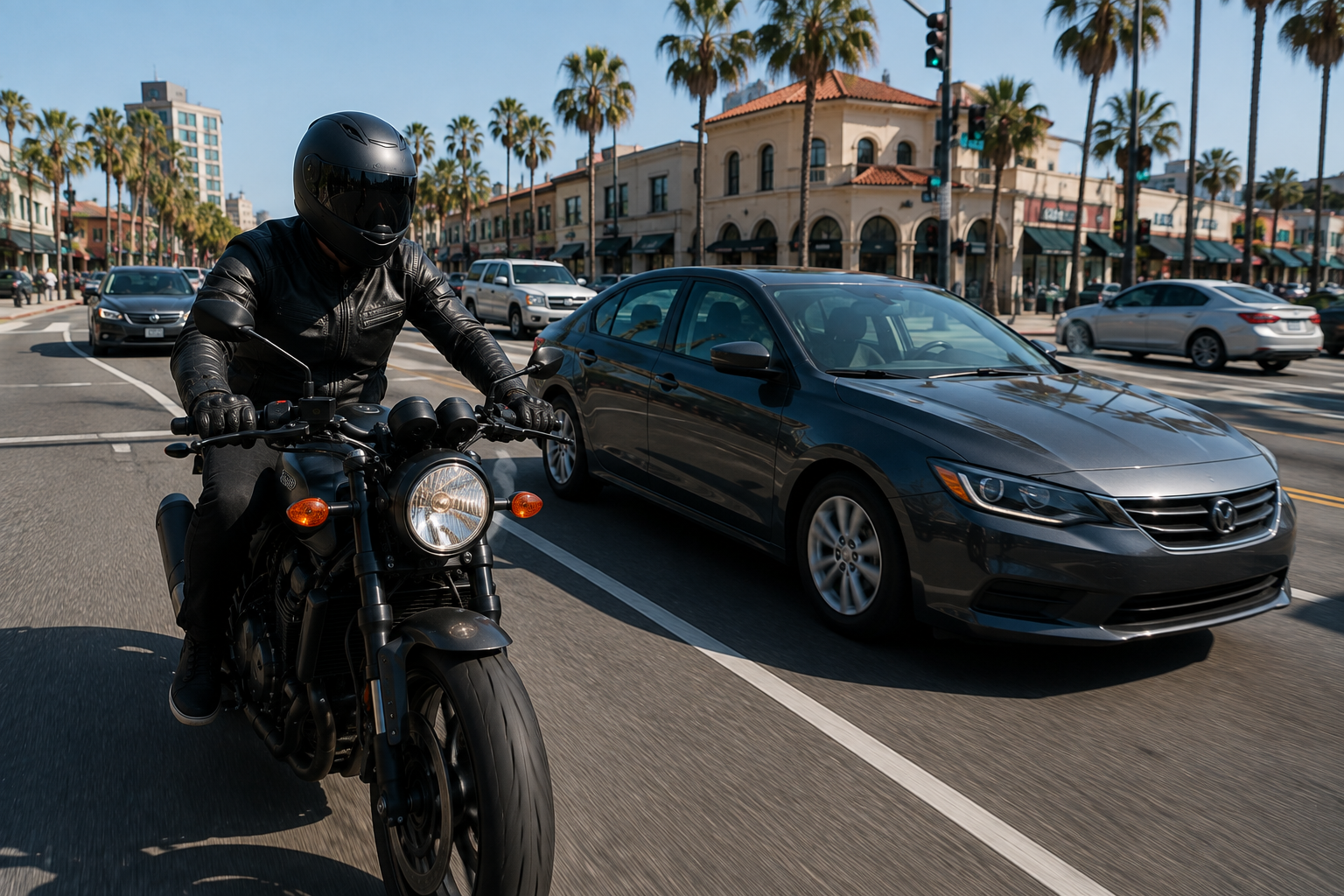
Intersections can be some of the most challenging places for motorcyclists to navigate. Multiple vehicles may approach from different directions, traffic signals can change quickly, pedestrians may be crossing, and drivers may be preparing to turn across lanes of traffic. Among these situations, a vehicle making a left turn across the path of an approaching motorcycle can create a particularly dangerous conflict.
Left-turn motorcycle accidents can happen even when a rider is traveling normally and following traffic rules. A driver may fail to notice a motorcycle, misjudge its distance or speed, become distracted, or begin a turn without leaving enough time for the motorcycle to pass safely. The smaller profile of a motorcycle can make visibility especially important at intersections.
Understanding why these collisions happen can help motorcyclists recognize potential hazards and make informed decisions when approaching intersections in Orange County and throughout California.
1. Why Intersections Present Greater Risks for Motorcyclists
Intersections require road users to make several decisions at the same time. Drivers may need to monitor traffic signals, watch for pedestrians, identify turn lanes, check surrounding vehicles, and determine whether there is enough space to complete a turn.
For motorcyclists, these conditions can create additional risks because motorcycles are smaller than passenger vehicles and can be harder to identify in a busy traffic environment. A driver may see a motorcycle but misjudge its distance, or may not recognize the motorcycle until there is very little time to react.
The Federal Highway Administration has identified intersections as an important area of motorcycle safety research, including conflicts involving motorcycles and vehicles making left turns across opposing traffic.
This is one reason the Motorcycle Safety resources on this site can be useful for riders who want to learn more about visibility, traffic awareness, and safer riding practices.
2. Why Left Turns Are Dangerous for Motorcyclists
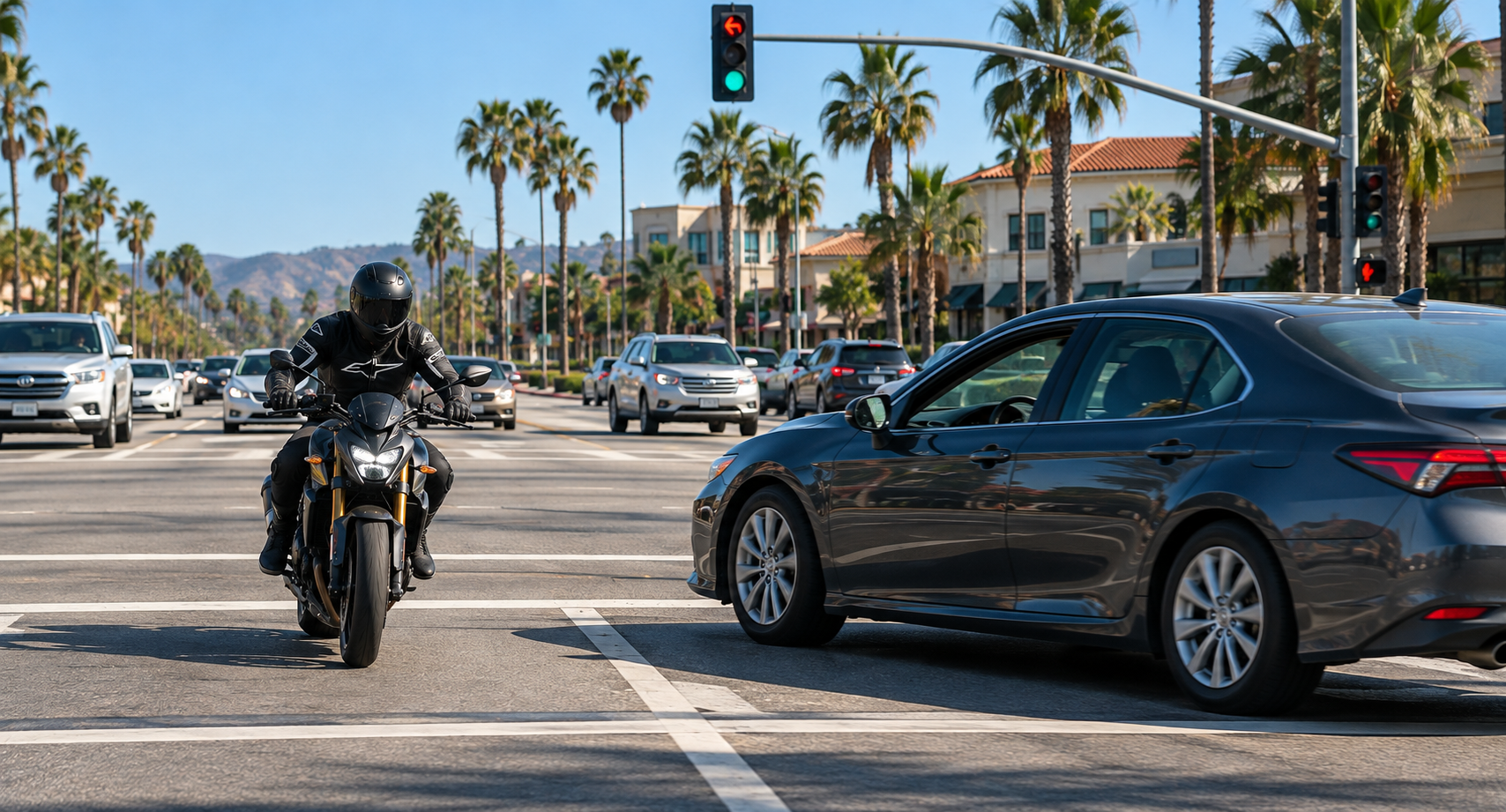
A left-turning vehicle can cross directly through the path of a motorcycle traveling in the opposite direction. If the driver does not see the motorcycle or incorrectly estimates how much time is available to complete the turn, the vehicles can reach the same point at nearly the same time.
Federal transportation research identifies left-turn conflicts as an important intersection safety issue. The Federal Highway Administration’s intersection safety resources explain that left-turning vehicles can create conflicts with opposing through traffic and that roadway design can be used to reduce some of these conflict points.
For a motorcycle rider, the danger is not limited to the initial impact. A collision with a turning vehicle can throw the rider from the motorcycle, cause the motorcycle to slide across the roadway, or place the rider in the path of other traffic.
Because of this, riders should approach intersections with heightened awareness, particularly when an oncoming vehicle is waiting to turn left.
3. Motorcycle Visibility Can Affect Intersection Safety
 Visibility is an important factor in many motorcycle collisions. A motorcycle occupies less visual space than a passenger vehicle, and its smaller size can make it more difficult for another driver to recognize its position or judge its speed.
Visibility problems can become more complicated when multiple vehicles are present. A motorcycle may be temporarily obscured by another vehicle, road infrastructure, landscaping, or other visual obstacles. At an intersection with several lanes, an approaching rider may also be difficult to distinguish from surrounding traffic.
Motorcyclists can improve their visibility by using headlights, maintaining appropriate lane positioning, wearing visible protective clothing, and avoiding prolonged placement in another vehicle’s blind spot. The National Highway Traffic Safety Administration’s motorcycle safety guidance recommends that riders remain visible, check surrounding traffic, and proceed cautiously at intersections.
Visibility, however, is not solely the responsibility of the motorcycle rider. Drivers approaching an intersection must also remain attentive and properly observe traffic before turning.
4. Misjudging Motorcycle Speed and Distance
Another factor in left-turn motorcycle accidents can be a driver’s difficulty estimating how quickly a motorcycle is approaching. A motorcycle may appear farther away than it actually is, particularly when the driver has only a short period to evaluate opposing traffic.
A driver preparing to turn may see a motorcycle and believe there is sufficient space to complete the maneuver. If the motorcycle reaches the intersection sooner than expected, the available gap can disappear quickly.
This type of situation is one reason riders should remain alert even when they have the right of way. Having the right of way does not eliminate the possibility that another road user may make an unexpected movement.
A defensive rider can watch the front wheels and positioning of approaching vehicles, look for signs that a driver may begin turning, and prepare to respond if the vehicle enters the rider’s path.
5. Traffic Signals and Right-of-Way Issues
Traffic signals are designed to organize movements through intersections, but drivers and riders still need to observe the signals and surrounding traffic carefully. A green signal does not mean that a rider should stop paying attention to vehicles preparing to turn.
California law also contains specific rules concerning vehicles making left turns. California Vehicle Code Section 21801 requires a driver intending to make a left turn to yield to approaching vehicles that are close enough to constitute a hazard during the turning movement. The driver must continue yielding until the turn can be completed with reasonable safety. The California Vehicle Code provision governing left turns provides the statutory language.
Traffic-signal violations can create another type of intersection collision. A driver entering an intersection against a red signal may conflict with traffic that has received a signal to proceed. California Vehicle Code Section 21453 addresses the responsibilities of drivers facing red traffic signals. The California red-signal statute provides additional information about these requirements.
Determining right of way after a crash therefore requires looking at the actual circumstances rather than assuming that one vehicle was automatically responsible simply because a collision occurred at an intersection.
6. Common Situations Leading to Left-Turn Motorcycle Crashes
Left-turn motorcycle collisions can develop in several different ways. One common scenario involves a vehicle traveling toward an intersection and waiting for an opening in opposing traffic. The driver sees what appears to be a sufficient gap and begins turning, but an approaching motorcycle is closer than anticipated.
Another scenario involves a driver looking for pedestrians, signs, or other vehicles while failing to recognize an approaching motorcycle. A driver may also become focused on the destination or roadway beyond the intersection rather than continuously monitoring opposing traffic.
Traffic congestion can introduce additional challenges. Multiple vehicles may block portions of an intersection, making it harder for a driver to see an approaching motorcycle. A motorcycle traveling beside or between larger vehicles can become less conspicuous.
Nighttime conditions, glare, weather, road curvature, and poor sight distance can create additional visibility challenges. Each of these circumstances may need to be considered when investigating a collision.
7. Evidence That May Help Explain an Intersection Crash
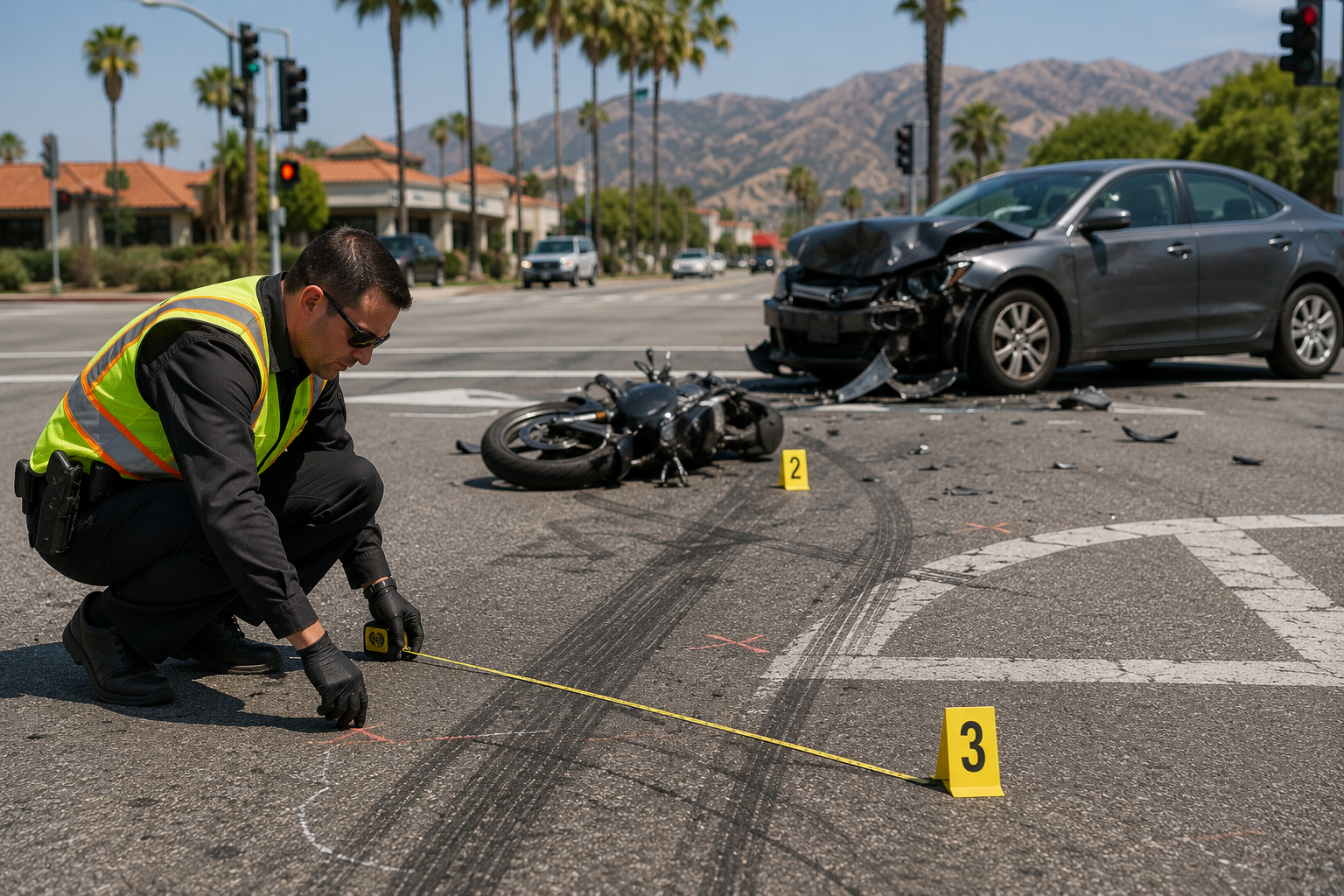
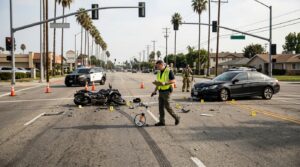 Determining how a left-turn motorcycle accident happened may require more than simply reviewing the final positions of the vehicles. Evidence from the accident scene can help establish the sequence of events.
Photographs can document vehicle damage, motorcycle damage, lane markings, traffic signals, road conditions, debris, and the surrounding intersection. Photographs taken from multiple viewpoints may provide more useful information than a single image.
Witness statements can also be important. A person standing near an intersection may have seen the motorcycle approaching, observed the turning vehicle, or noticed whether a traffic signal had changed.
Video footage can provide particularly useful information when available. Nearby businesses, traffic systems, dashboard cameras, helmet cameras, and other recording devices may capture portions of the accident or the moments immediately before it.
Physical evidence can also include tire marks, debris locations, vehicle damage, and measurements of the roadway. Investigators may compare these details with statements and available video to develop a more complete picture of the collision.
8. Why Vehicle Damage May Matter
The location and characteristics of damage can provide information about how a motorcycle and another vehicle interacted. For example, damage to the front of a motorcycle may indicate a different collision sequence than damage along the side of the motorcycle.
Similarly, damage to the front corner, side, or rear portion of a passenger vehicle may help investigators evaluate the relative positions of the vehicles at impact.
Damage alone does not automatically determine who was responsible. Instead, it can be considered together with photographs, roadway measurements, traffic signals, witness accounts, and other evidence.
This type of analysis can be particularly useful when the people involved remember the collision differently or when the accident occurred too quickly for anyone to provide a complete account.
9. How Roadway Design Can Influence Intersection Crashes
The design of an intersection can affect how vehicles approach, turn, and interact with one another. Factors such as the number of lanes, sight distance, turn lanes, traffic signals, roadway alignment, lighting, and surrounding objects can influence how easily road users can identify potential conflicts.
The Federal Highway Administration’s intersection safety research identifies factors such as sight distance, roadway geometry, left-turn phasing, traffic control, lighting, and the presence of turn lanes when evaluating intersection safety.
Some intersection designs are specifically intended to reduce left-turn conflict points. For example, the Federal Highway Administration identifies reduced left-turn conflict intersections as a proven safety countermeasure in appropriate locations.
For an individual motorcycle accident, however, the existence of a particular intersection design does not by itself establish responsibility. The specific traffic movements and circumstances still need to be evaluated.
10. What Motorcyclists Can Do When Approaching an Intersection
Riders cannot control what another driver does, but they can make decisions that provide more time and space to respond to unexpected movements.
- Scan approaching vehicles for signs that a driver may turn across your path.
- Reduce speed when conditions require additional reaction time.
- Maintain an appropriate lane position and avoid unnecessary blind spots.
- Keep your attention focused on traffic rather than distractions.
- Watch traffic signals and anticipate changes in surrounding traffic.
- Maintain enough space to brake or maneuver if another vehicle enters your path.
- Use your headlights and visible protective equipment to improve conspicuity.
The NHTSA motorcycle safety guidance similarly emphasizes defensive riding, maintaining space around the motorcycle, checking behind before changing lanes, and exercising additional caution at intersections.
11. What to Document After an Intersection Collision
If a rider is physically able to document the scene after a crash, the surrounding intersection can be just as important as the damaged vehicles. Photographs should capture the traffic lanes, signal heads, stop lines, turn lanes, signs, nearby businesses, road surface, and any visible debris or tire marks.
It can also be helpful to preserve contact information for witnesses and keep copies of accident-related photographs and documents. Medical records and repair documentation can establish additional information about the consequences of the collision.
Riders should also preserve available video evidence. If a nearby business or other location may have security footage, identifying the potential source promptly can be important because recording systems may not retain footage indefinitely.
12. Understanding Fault After a Left-Turn Motorcycle Accident
A left-turn collision does not automatically establish every aspect of legal responsibility. Investigators may need to examine the traffic signal, vehicle positions, motorcycle speed, roadway conditions, visibility, witness accounts, and other evidence.
California’s comparative fault system can also make the analysis more detailed when multiple factors contributed to a collision. A rider’s actions, another driver’s actions, and potentially other circumstances may all need to be considered when evaluating responsibility.
For this reason, statements made immediately after an accident should focus on accurate facts rather than assumptions about who caused the crash. Evidence that objectively documents the intersection and the vehicles can be particularly valuable when accounts differ.
Conclusion
Left-turn motorcycle accidents can occur when a driver fails to see an approaching motorcycle, misjudges its distance or speed, becomes distracted, or begins a turn when it is not safe to do so. Intersections create numerous potential conflict points, making awareness and careful observation especially important for motorcycle riders.
Understanding the risks associated with left-turn movements can help riders approach intersections more cautiously. After a collision, photographs, witness information, traffic-signal details, video footage, vehicle damage, and roadway evidence may help establish how the accident occurred.
Although defensive riding cannot eliminate every intersection hazard, maintaining awareness, preserving space, and anticipating unexpected vehicle movements can give motorcyclists more opportunities to respond when traffic does not behave as expected.