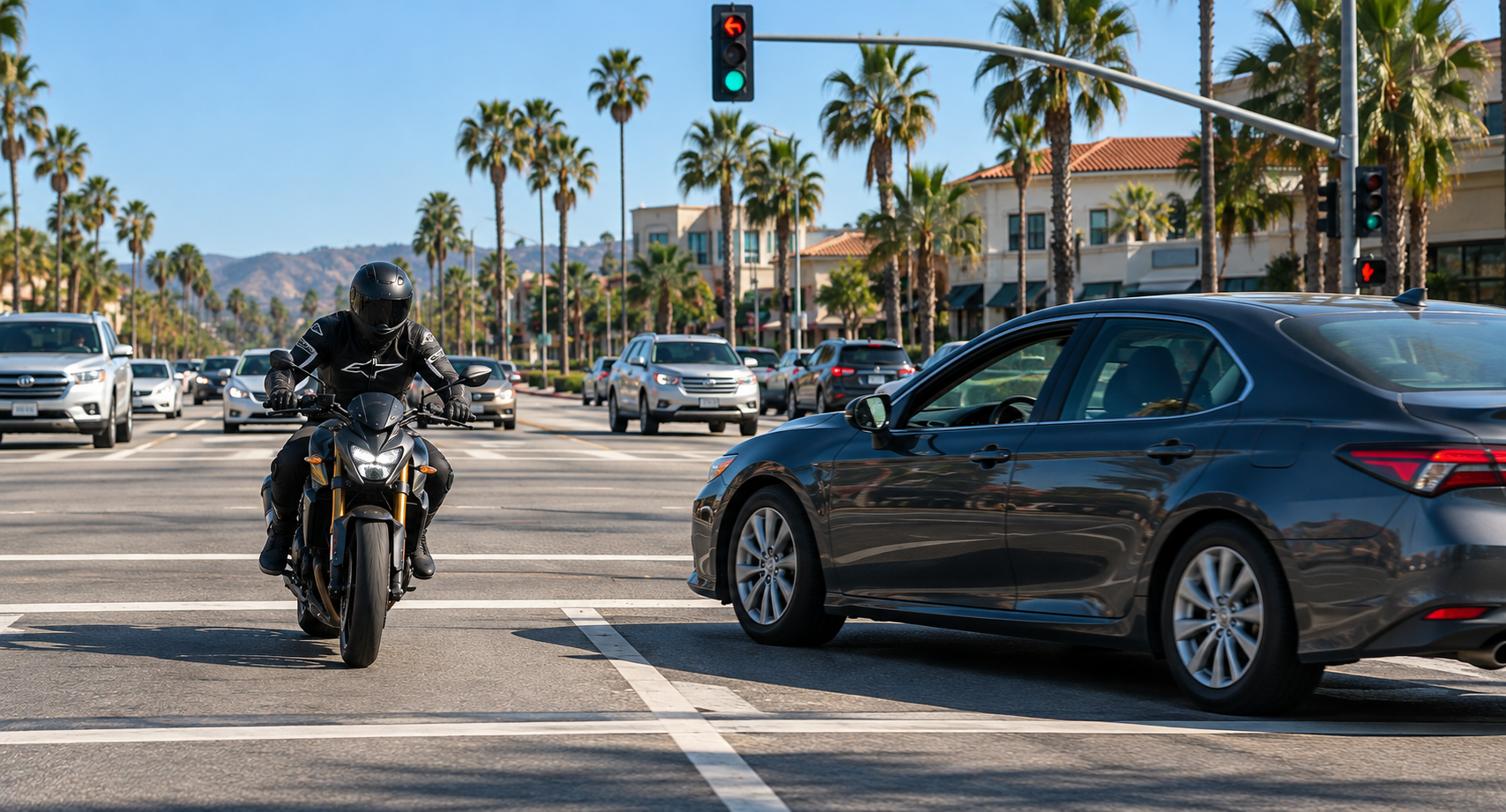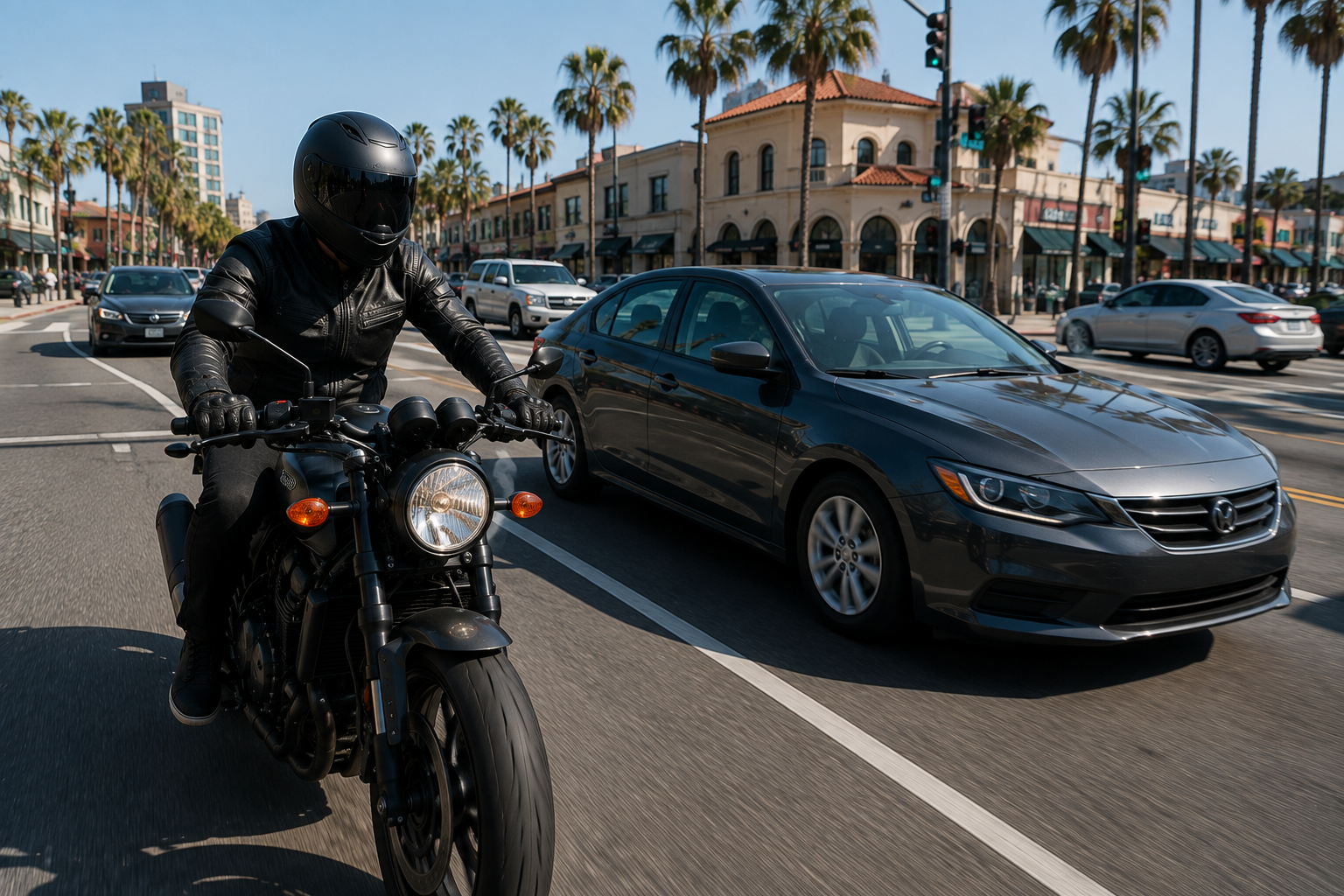
Determining what caused a motorcycle accident is not always as simple as looking at the vehicles after the collision. A crash may happen in only a few seconds, leaving the people involved with different memories of what occurred. Drivers and riders may disagree about speed, lane position, traffic signals, braking, or who had the right of way.
Motorcycle accident reconstruction is one method used to analyze the available evidence and develop a clearer understanding of how a collision happened. Investigators may examine photographs, vehicle damage, tire marks, roadway conditions, witness accounts, video footage, and other information to determine the sequence of events.
This type of investigation can be particularly important in motorcycle collisions because the rider and motorcycle may travel separately after impact, while the involved vehicles can sustain damage in different locations. Understanding how these pieces fit together may help establish what happened before, during, and after a crash.
1. What Is Motorcycle Accident Reconstruction?
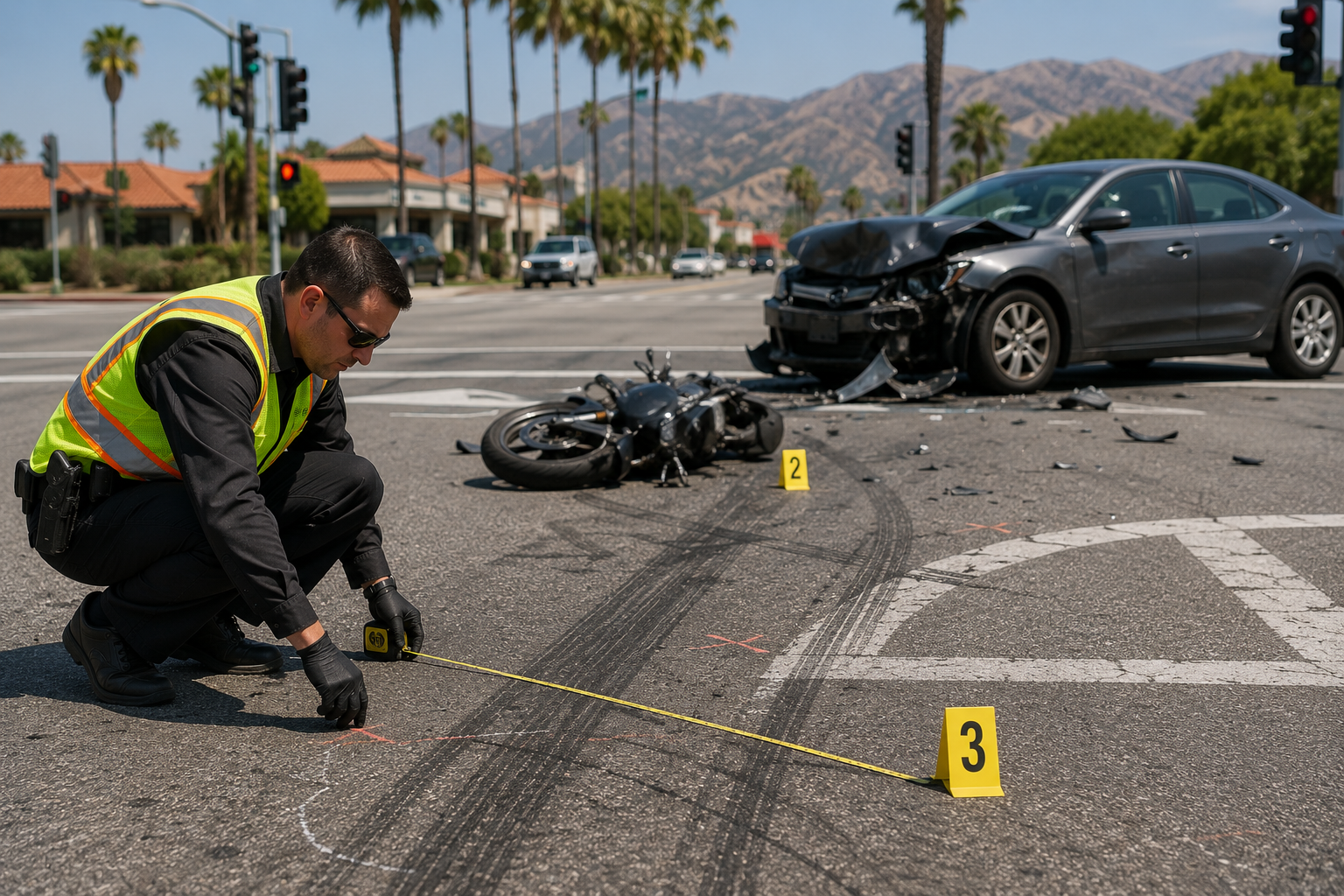
 Motorcycle accident reconstruction is the process of analyzing physical and other available evidence from a collision to determine how the accident may have occurred. A reconstruction specialist may examine the roadway, vehicles, motorcycle, photographs, measurements, witness statements, and other information to develop an evidence-based sequence of events.
The goal is not simply to identify where the motorcycle ended up after the crash. Investigators may also examine where the motorcycle and other vehicles were positioned before impact, how they moved during the collision, and where they came to rest afterward.
The National Highway Traffic Safety Administration’s motorcycle safety resources provide information about motorcycle crash risks and rider safety. While general safety information does not determine fault in an individual collision, it provides useful context for understanding the unique circumstances surrounding motorcycle crashes.
2. What Does a Motorcycle Accident Reconstruction Involve?
A reconstruction investigation can involve several different types of evidence. The specific evidence available will depend on the circumstances of the accident and how quickly the scene was documented.
Investigators may begin by examining the physical crash scene. They can document lane markings, traffic signals, road geometry, intersections, slopes, visibility, debris, tire marks, and other roadway characteristics. These details can help establish the environment in which the collision occurred.
Vehicle damage can also provide important information. The location and severity of damage may help investigators understand the direction of impact and the relative positions of the motorcycle and another vehicle. Damage patterns should be considered together with other evidence rather than interpreted in isolation.
Photographs are another important source of information. Images taken immediately after a collision may preserve evidence that later disappears as vehicles are moved, roadways are cleaned, or motorcycles and cars are repaired.
For riders, understanding the importance of documentation is another reason to follow the basic steps discussed in what to do after a motorcycle accident. When circumstances permit, photographs and other information collected after a crash can become useful when the accident is later investigated.
3. Why Motorcycle Accident Reconstruction Can Be Important
Motorcycle collisions can involve conflicting accounts. A driver may claim that a motorcycle suddenly entered a lane, while the rider may report that the vehicle changed lanes without warning. When the accounts differ, investigators may need to examine objective evidence to determine which explanation is consistent with the available facts.
Reconstruction can also be useful when there are no independent witnesses. Physical evidence may provide information about the collision even when no one can clearly describe everything that happened.
Another issue is the limited amount of time available to react during a crash. A motorcycle may travel a significant distance in only a few seconds, and the rider’s actions immediately before impact may be difficult to remember accurately after a traumatic event. Physical evidence can help investigators evaluate the sequence instead of relying exclusively on recollections.
Reconstruction may also help distinguish between different potential causes. For example, investigators may examine whether a collision is consistent with a sudden lane change, turning movement, braking event, following-distance issue, roadway hazard, or another circumstance.
4. Evidence Used in Motorcycle Accident Reconstruction
Several types of evidence may contribute to a reconstruction. No single piece of evidence necessarily establishes the entire sequence of events. Instead, investigators may compare multiple sources to determine whether they support the same explanation.
Vehicle and Motorcycle Damage
The motorcycle and other vehicles involved in the collision can contain valuable physical evidence. Investigators may examine impact points, scratches, dents, broken components, and other damage. The height and location of damage can sometimes provide information about how vehicles interacted during a collision.
Tire and Skid Marks
Tire marks may provide information about braking, steering, or vehicle movement. Their location and characteristics can be considered alongside roadway measurements and photographs. However, the presence or absence of tire marks does not automatically establish how fast a vehicle was traveling or who was responsible for the crash.
Roadway Evidence
Road conditions can also be relevant. Investigators may examine lane markings, traffic signals, road surface conditions, debris, construction areas, sight distance, and other characteristics of the location. A roadway feature that affects visibility or traction may become important depending on the circumstances.
Video and Digital Evidence
Traffic cameras, surveillance systems, dashcams, helmet cameras, and other video sources can sometimes provide direct information about a collision. Video may show vehicle positions, traffic movements, signals, lane changes, or events immediately before impact.
Digital evidence may be especially valuable when a crash occurs in a busy Orange County area with nearby businesses, intersections, parking facilities, or other locations that use surveillance systems. The availability and retention period of recordings varies, so potentially relevant footage may need to be identified promptly.
5. How Vehicle Damage Can Tell Part of the Story
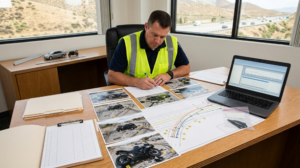 After a motorcycle crash, it can be tempting to assume that the most heavily damaged vehicle was responsible for the collision. That conclusion is not necessarily accurate. Damage severity depends on numerous factors, including vehicle size, impact angle, speed, vehicle construction, and the location of the impact.
Instead, investigators can examine the pattern of damage. For example, damage concentrated on a motorcycle’s front end may be evaluated differently from damage along its side. Damage to another vehicle’s doors, fender, bumper, or rear quarter panel may provide additional information about the relative positions of the vehicles.
Investigators can compare these damage patterns with photographs, measurements, roadway evidence, and witness accounts. When multiple pieces of evidence point toward the same sequence, they may provide a stronger basis for understanding the collision.
This is particularly relevant when determining whether a motorcycle was traveling straight, changing lanes, overtaking another vehicle, or approaching an intersection at the time of impact.
6. How Experts Use Evidence to Reconstruct a Crash
A reconstruction specialist may begin by gathering the available evidence and establishing the physical characteristics of the accident scene. Measurements and photographs can then be used to document the roadway and the positions of vehicles and other objects.
The specialist may compare the physical evidence with statements from the people involved and witnesses. If a person’s description conflicts with physical evidence, the investigator can examine whether the available information supports or contradicts that account.
In some cases, specialists may create diagrams, scaled drawings, computer models, or other visual representations of the accident. These materials can help illustrate vehicle positions and movements before and during the collision.
The California Highway Patrol’s collision investigation resources provide additional information about the role of collision investigation and traffic safety enforcement in California.
Accident reconstruction should remain grounded in the available evidence. A reconstruction is not simply a guess about what happened. The reliability of any conclusion depends on the quality of the evidence, the methodology used, and the assumptions made during the analysis.
7. Determining Speed After a Motorcycle Crash
Speed can become an important issue in motorcycle accident investigations, but determining speed is more complicated than looking at the final resting position of a motorcycle.
Investigators may consider physical evidence such as tire marks, vehicle damage, roadway measurements, video footage, and other information. The circumstances of braking and impact may also affect the analysis.
A reconstruction specialist may use several pieces of evidence to estimate vehicle movement before the collision. However, an estimated speed should be distinguished from an assumption based solely on the severity of the damage.
Speed can also be relevant even when a motorcycle rider was not traveling above the posted speed limit. A driver’s or rider’s speed may affect reaction time, stopping distance, or the ability to avoid a developing hazard. The circumstances of each accident therefore need to be evaluated individually.
8. Traffic Signals, Lane Position, and Right of Way
Intersections are common locations for serious motorcycle collisions. Determining what happened may require examining traffic signals, lane markings, turning movements, and the positions of the motorcycle and other vehicles.
For example, a reconstruction may examine whether a vehicle was turning across the motorcycle’s path or whether both vehicles were traveling in the same direction before the collision. Video footage or witness accounts may be particularly useful when determining the sequence of traffic movements.
Lane position can also matter. A motorcycle may be traveling in a vehicle’s blind spot, moving between lanes, preparing to turn, or traveling within a designated lane. The position of the motorcycle relative to other vehicles can be compared with physical damage and roadway evidence.
California’s rules governing motorcycle operation include specific provisions concerning lane splitting. Because your site already covers this subject, readers can review California motorcycle lane splitting laws for additional information about that riding practice.
9. How Witnesses and Physical Evidence Work Together
Witness statements can be valuable, but eyewitness accounts are not always complete. A witness may have seen the impact without seeing what happened several seconds earlier. Another person may have observed a vehicle approaching an intersection but not have a clear view of the collision itself.
For that reason, investigators may compare witness statements with photographs, video, vehicle damage, roadway evidence, and other available information. When these sources are consistent, they can provide greater clarity about the accident sequence.
Witnesses should describe what they personally observed rather than attempting to determine legal responsibility. A statement about seeing a vehicle move into another lane is different from a conclusion about which person was legally at fault.
10. What Can Make a Motorcycle Crash Investigation More Difficult?
Evidence can disappear quickly after an accident. Vehicles may be towed, repaired, or moved. Roadways may be cleaned. Tire marks can fade. Surveillance recordings may eventually be overwritten. Weather can also alter physical evidence at the scene.
Another challenge is that motorcycles can move significantly after an impact. A rider may be separated from the motorcycle, while another vehicle continues moving before stopping. The final resting locations therefore may not necessarily represent the exact positions of the vehicles at the moment of impact.
For these reasons, accident reconstruction generally requires careful examination of the complete evidence rather than relying on one photograph, one statement, or the final location of a vehicle.
11. How Riders Can Preserve Important Information
When medically and physically able to do so, riders can help preserve potentially useful information by documenting the accident scene. Photographs should capture the motorcycle, other vehicles, roadway, traffic signals, lane markings, visible damage, debris, and surrounding area.
It can also be useful to preserve contact information for witnesses and maintain copies of relevant documents. Medical records, repair estimates, photographs, insurance correspondence, and other accident-related materials can help establish a timeline.
Riders should also avoid altering or repairing physical evidence before it has been properly documented when circumstances allow. If the motorcycle has suffered substantial damage, photographs taken before repairs may be particularly useful for understanding the condition of the motorcycle immediately after the crash.
These practices complement the broader defensive riding strategies discussed in the site’s defensive riding tips for California motorcyclists.
12. Reconstruction Does Not Automatically Determine Legal Fault
Accident reconstruction can help explain how a collision occurred, but reconstruction evidence is only one part of evaluating a motorcycle accident. Legal responsibility may depend on additional evidence, applicable traffic laws, witness testimony, insurance issues, and the specific facts of the case.
A reconstruction analysis should therefore be viewed as an evidence-based examination of the collision rather than an automatic determination of legal liability. Different parties may also present competing interpretations of the same physical evidence.
Ultimately, the strength of an accident investigation depends on the quality and reliability of the information available. Preserving evidence early can make it easier to evaluate competing accounts and develop a more complete understanding of what happened.
Conclusion
Motorcycle accident reconstruction can provide valuable insight into how a collision occurred when the circumstances are disputed or difficult to understand. By examining vehicle damage, motorcycle damage, tire marks, roadway conditions, photographs, video, witness accounts, and other evidence, investigators can develop a more detailed picture of the events surrounding a crash.
For motorcycle riders in Orange County, preserving evidence after a collision can be particularly important because physical conditions and digital records may change or disappear over time. A careful investigation can help separate assumptions from evidence and provide a clearer understanding of the sequence leading to a motorcycle accident.